DATES
Best before, not use-by
GOV.UK lists tinned foods such as baked beans and canned tomatoes among foods with a best before date. After it, food is usually safe to eat but may not be the same quality.
Check a can doodlecan
Start
WHAT THE GUIDANCE SAYS
A tin is built to last on the shelf.
The date on it is about quality, not safety. What matters more is the state of the can, how you store the leftovers once it is open, and where the empty tin goes next.
BEST BEFOREis about quality
Check a canKeep in mind
THE SHORT ANSWER
Tinned food lasts a long time in the cupboard.
The guidance focuses on damage, leftovers and recycling.
DATES
GOV.UK lists tinned foods such as baked beans and canned tomatoes among foods with a best before date. After it, food is usually safe to eat but may not be the same quality.
Check a canLEFTOVERS
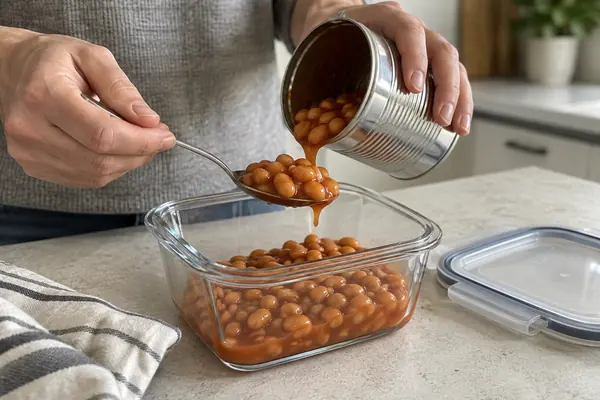
Zero Waste Scotland says to empty leftovers into a bowl or container and put it in the fridge, and eat them within 2 days.
How to store themRECYCLING
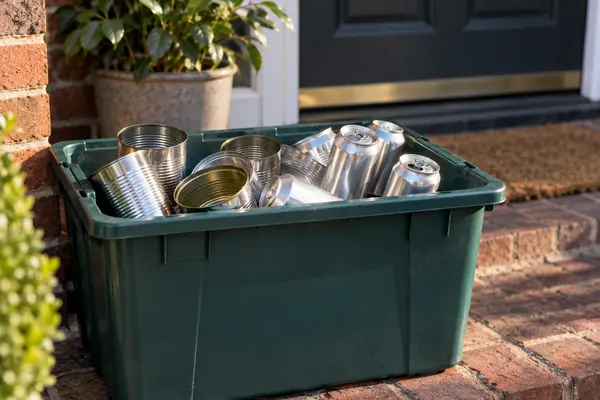
Recycle Now says steel and aluminium can be recycled time and time again without losing quality, into new cans or other products.
See the numbersGeneral information only, not medical advice. For advice about your own health, speak to a doctor, pharmacist or other qualified health professional.
A QUICK CAN CHECK
Pick what you notice about a tin to see what the guidance suggests. The bar shows how much caution the guidance calls for.
Based on GOV.UK food labelling guidance, NDSU Extension and University of Illinois Extension. General food safety information only.
TWO NUMBERS WORTH KNOWING
One figure on how many drinks cans are recycled,
one on how much energy recycling saves.
81%
Aluminium drinks cans recycled in the UK in 2023
Every Can Counts reported that 81 percent of aluminium drinks cans were recycled in 2023, a record 10.7 billion cans, based on Alupro's analysis of Environment Agency figures.
DRINKS CANS · EVERY CAN COUNTS
≈ 5%
Energy and emissions of recycled aluminium, compared with new
Recycle Now says recycling aluminium uses around only 5 percent of the energy and emissions needed to make it from the raw material, bauxite.
ENERGY · RECYCLE NOW
Recycle Now says UK aluminium drinks cans usually go to a closed-loop plant in Warrington, where they can be made into new cans and be back on the shelf in about six weeks.
FOUR HABITS TO TRY
None of these needs special kit. They are about where tins live, what happens when one is half used, and where the empty goes.
Step 1
NDSU Extension suggests writing the purchase date on cans and arranging the cupboard so the oldest are used first.
Step 2
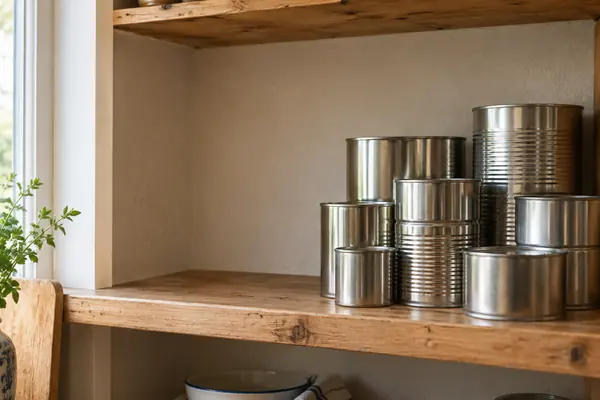
Store tins in a cool, dry place, not above the cooker, under the sink or anywhere with temperature extremes.
Step 3
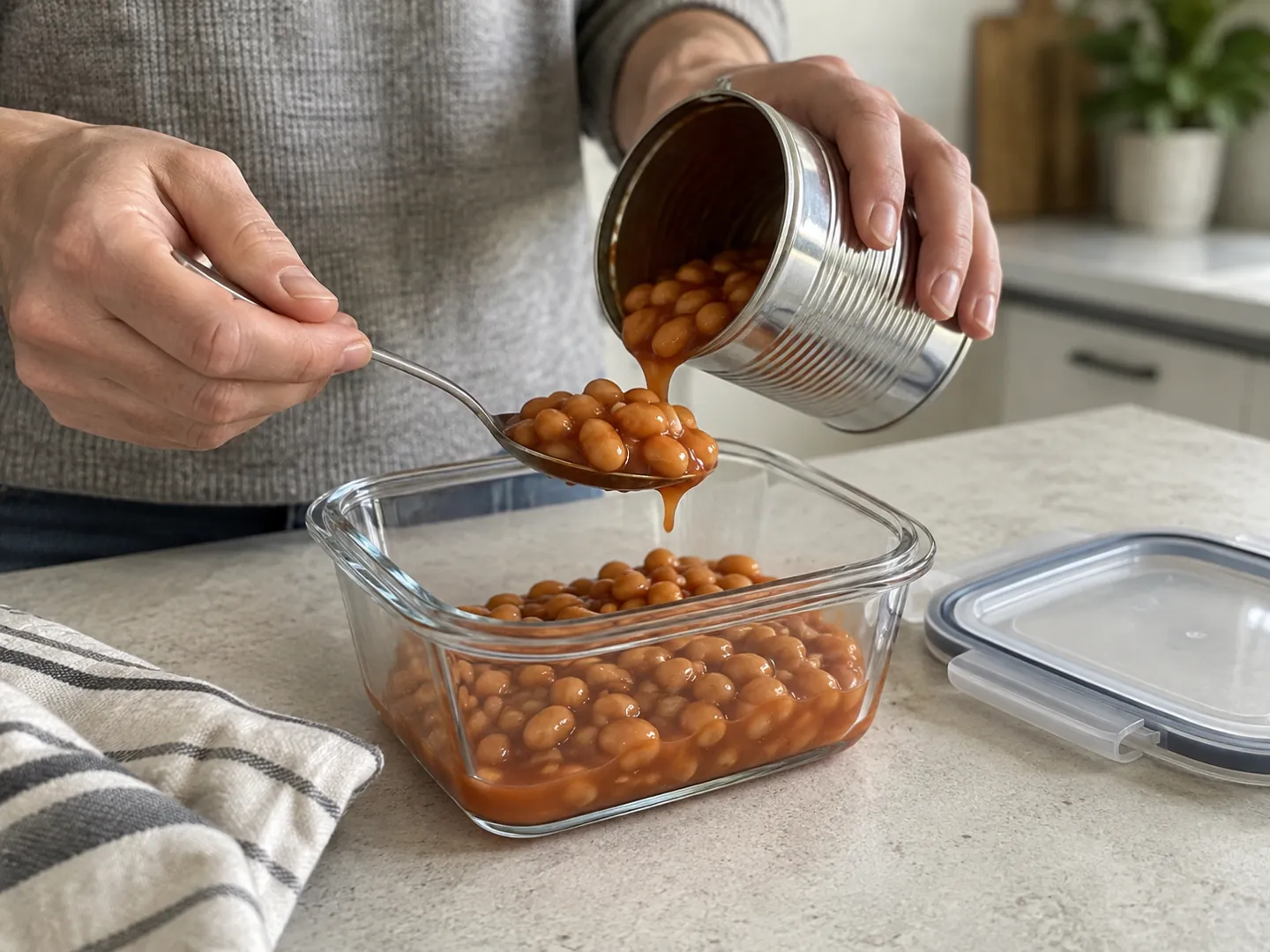
Spoon what is left into a covered container, keep some of the liquid, and put it towards the back of the fridge.
Step 4
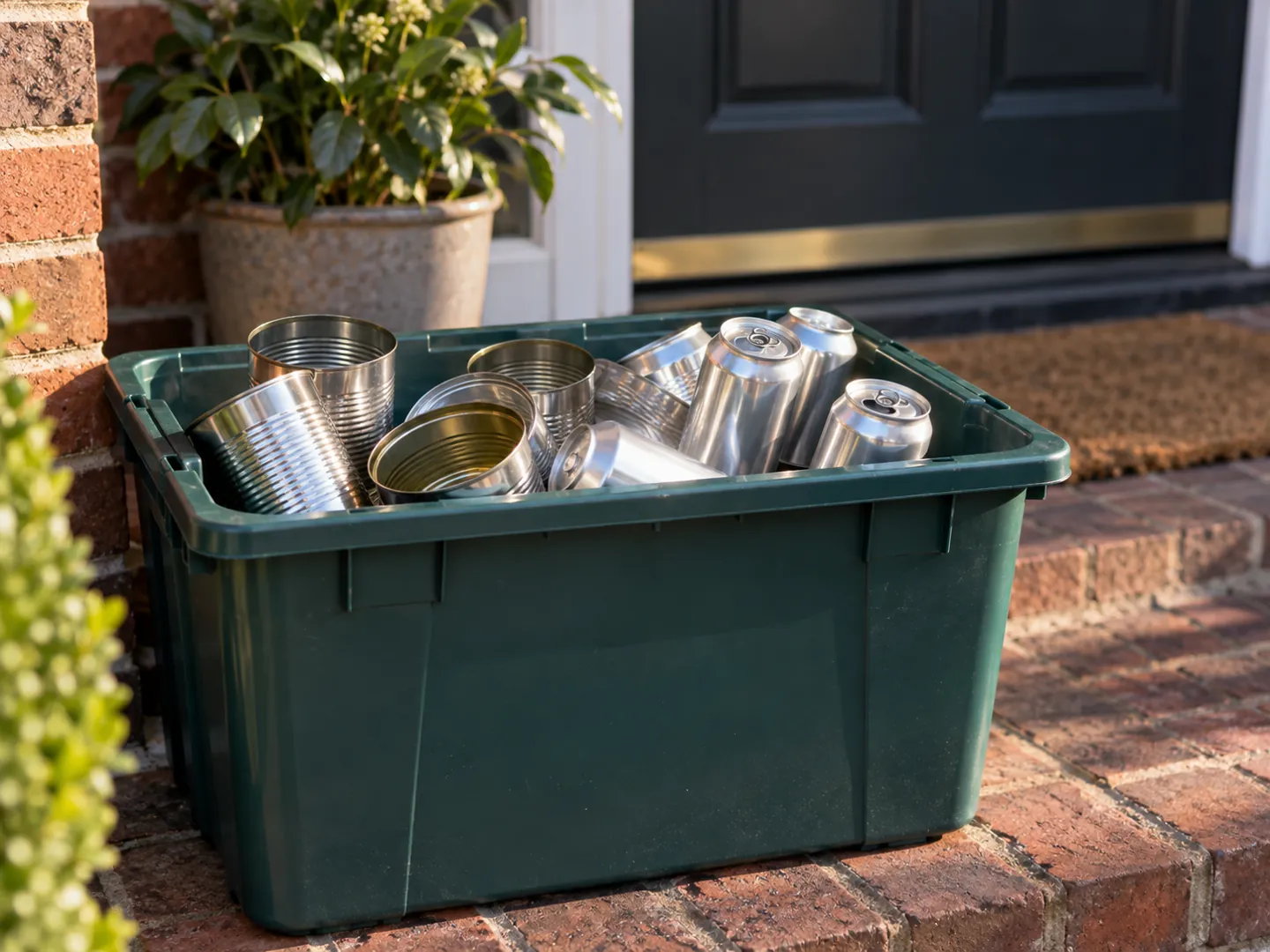
Recycle Now says aerosols, foil takeaway trays and tomato purée tubes can go in with food tins and drinks cans.
HOW LONG TINS KEEP
Guidance from US university extension services splits tinned food by acidity. NDSU Extension gives up to 18 months for high-acid foods such as tomatoes and other fruit, and two to five years for low-acid foods such as canned meat and vegetables.
These are quality guides rather than safety cut-offs. University of Illinois Extension says the main concern with shop-bought canned food is quality over time, provided the can is not bulging, rusted or deeply dented.
Questions
GOV.UK lists tinned foods among those with best before dates. After the date, food is usually safe to eat but may not be the same quality, and you can use sight, taste or smell to decide.
Guidance suggests moving the food out of the tin into a covered container first. Zero Waste Scotland says tin can transfer to the food once it is exposed to air, and suggests eating leftovers within 2 days.
NDSU Extension advises against using cans with sharp dents, especially in the seam. University of Illinois Extension says deeply dented, rusted or bulging cans are best thrown away.
NDSU Extension gives up to 18 months for high-acid foods such as tomatoes and fruit, and two to five years for low-acid foods such as canned meat and vegetables, stored somewhere cool and dry.
Yes. Recycle Now says both steel and aluminium can be recycled again and again without losing quality. Every Can Counts reported that 81 percent of UK aluminium drinks cans were recycled in 2023.
Destination
Updated
ABOUT THIS NAME
doodlecan.com is part of the DoodleSale portfolio. It isn't in an auction right now, but you can ask about leasing it.